
EDUCATIONAL TECHNOLOGY
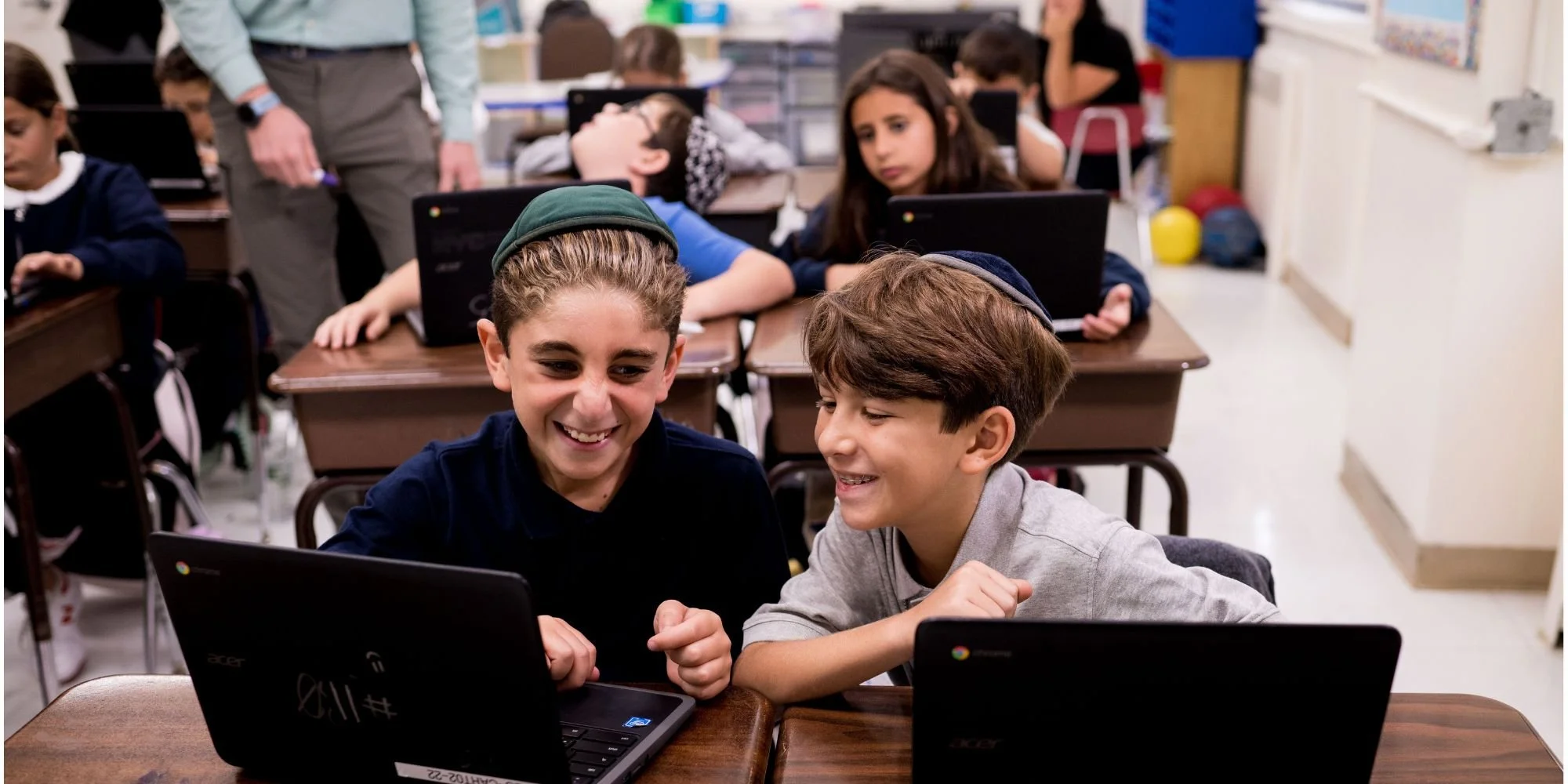
At Yeshivah of Flatbush, Educational technology is used as a vehicle to enhance classroom learning. Yeshivah of Flatbush Elementary School aims to incorporate meaningful use of educational technology for targeted, personalized instruction. Technology use in the classroom and at home is well thought out and used for tasks that were previously inconceivable. We use data from our ed tech programs and digital assessments for differentiation, to identify achievement gaps, and to inform instruction.
Facilitate learning - make education more efficient and accessible
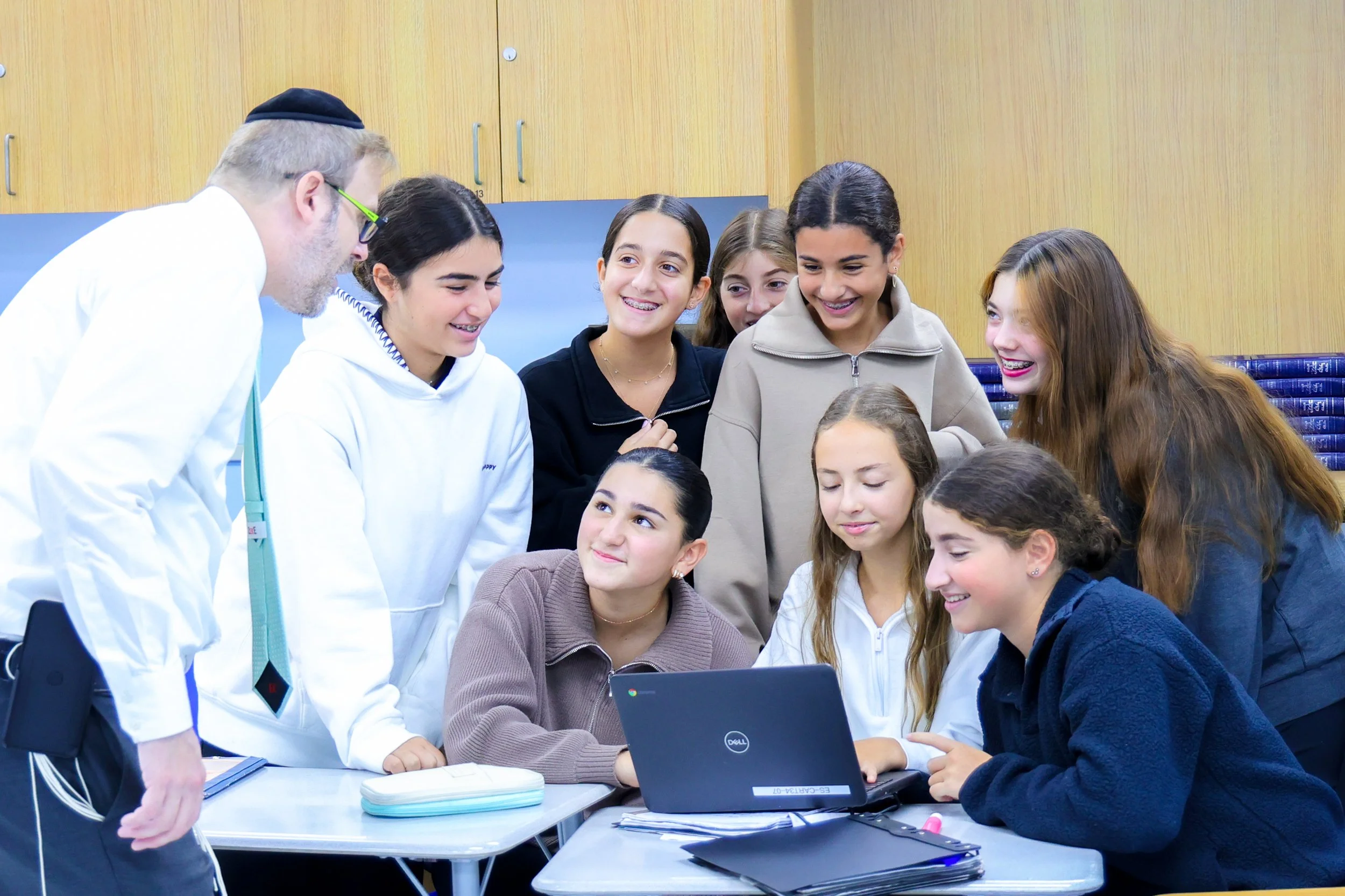
These programs support basic instructional tasks, making it easier for teachers to deliver content and for students to access it. They often serve as tools to streamline learning processes, enhance engagement, and organize materials.
Examples: Learning management systems (LMS) like Google Classroom or Seesaw, where teachers can distribute assignments, give feedback, and organize resources. This also includes Google Docs and Slides and the like.
Advance learning - offers individualized paths and fosters deeper understanding
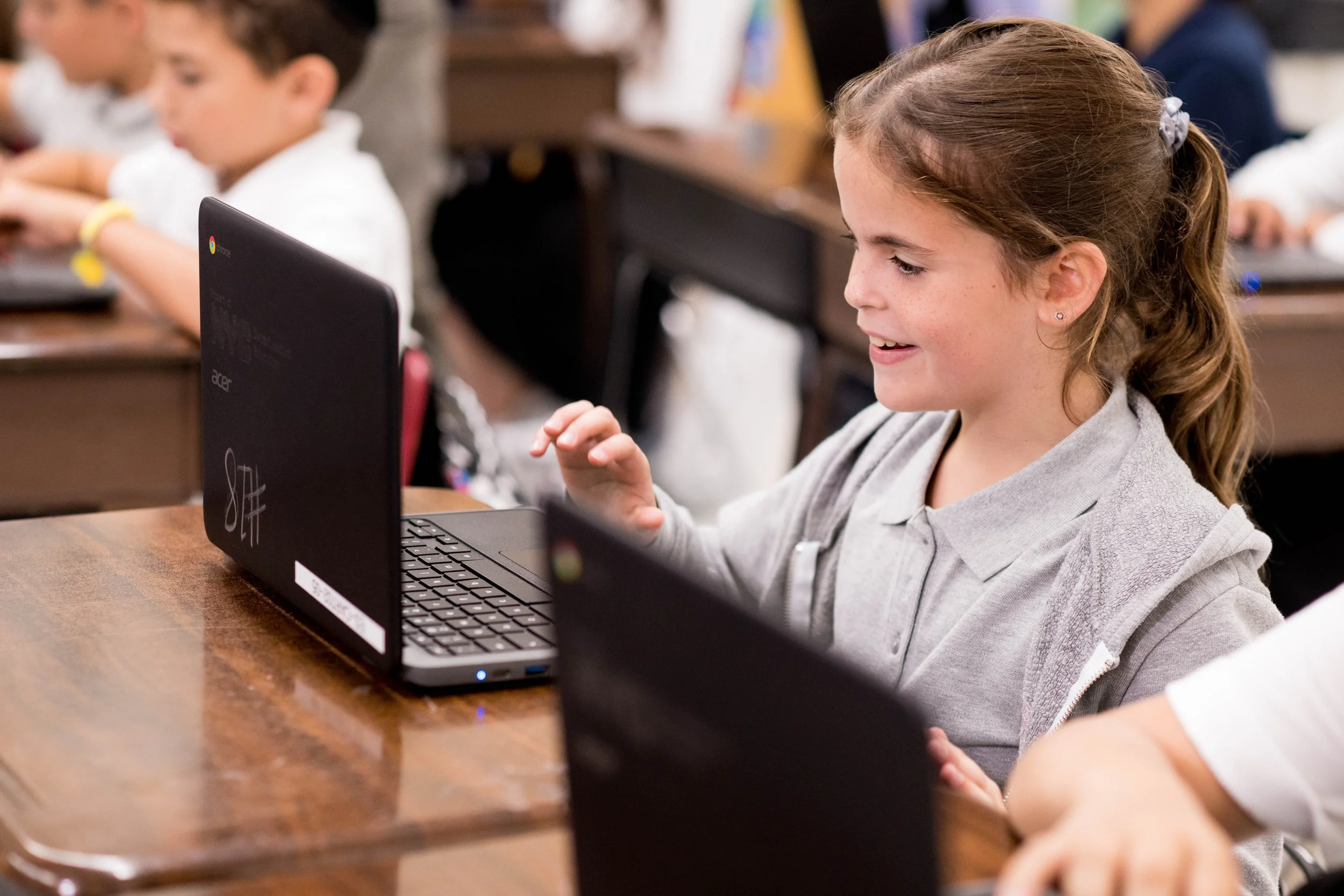
These tools deepen students' understanding, foster critical thinking, and promote mastery of higher-order skills. They often incorporate adaptive technologies, data analytics, and personalized learning paths that challenge students and promote long-term skill development.
Examples: Platforms like I-Ready, IXL, Reflex, Edpuzzle, Scratch, ItalAm.
-
At Yeshivah of Flatbush, we prioritize creating a secure and optimal environment for learning and socialization for all students. Research continues to show that the increased use of smartphones by elementary-aged children has contributed significantly to higher rates of anxiety, depression, and low self-esteem, as well as long-term declines in academic performance. The research goes so far as to conclude that even the presence of a smartphone in the proximity of a classroom leads to higher rates of distractibility and lower academic achievement and performance. Empirical observations within our own school setting clearly highlight these challenges. Students' eagerness to engage with gaming and messaging apps during arrival and dismissal times results in easy distractions. This behavior significantly detracts from the serious learning environment we strive to maintain and encourages negative social behaviors towards both students and staff members.
In order to ensure a safe and conducive social and educational environment for all students, Lower School students are expected to adhere to the following guidelines:
For Lower School Students in Grade 3 and lower:
All YOF students entering 3rd grade and younger may not own their own personal smartphone. This policy will be in effect until they reach 8th grade.
For Lower School Students in Grade 4:
● Students are not allowed to be in possession of a smartphone or smartwatch on school grounds. This includes transportation to and from school.
● Parents who wish for their child to have a means of communication in their possession while traveling to and from school should consider purchasing a smartphone-alternative device (recommended options are listed here). Parents who wish to be able to locate their child on their way to or from school should consider purchasing an Airtag or Tile.
● Students are not allowed to use a phone or smartwatch of any kind on school grounds at any time, including when entering or exiting the building during arrival and dismissal hours. This applies during all school hours including lunch, recess, and other non-classroom times.
● All devices must be powered down and secured in the student’s backpack before entering the building in the morning and may not be powered on again until the student has left the building in the afternoon.
● Students found using any such device during the school day will have the item confiscated for the day and will be subject to disciplinary consequences up to and including suspension.
● Students found in possession of a smartphone on school property at any time will have the item confiscated. The device will be held by the school until a parent collects it.
For Lower School Students in Grade 5:
While we recognize that a significant number of students in our population may already own and use smartphones in Grade 5, Yeshivah of Flatbush strongly discourages this practice. Instead, we encourage parents to collectively work towards delaying smartphone ownership until children have the cognitive and emotional maturity necessary to handle the potential dangers that come with owning a smartphone. However, if a parent chooses to allow a Grade 5 student to own a smartphone, the following guidelines must be adhered to. The policy has been designed to align with our Middle School policy as part of our continuous efforts to streamline the transition process between 5th and 6th grades.
● Students who own smartphones and bring them to school must power off the phone prior to entering the building.
● Students must turn their phones in at the beginning of their first class of the day. The phones will be collected and stored securely during the school day and will be returned to students at the start of dismissal.
● Grade 5 students may not use any kind of cell phone at any time during the school day on school property, including when entering or exiting the building during arrival and dismissal hours.
For All Lower School Students:
● Approved devices for all grades must be powered off prior to entering the school building and cannot be turned on again until exiting the building after dismissal. ● No smartwatches of any kind are allowed in school.
● Students may not use any privately-owned devices with cameras, internet access, social media, or games at any time during the school day.
● In the event that a student needs to call home during the day, permission must be obtained from a classroom teacher to use a supervised office phone.
● Parents who need to get their child a message during the school day may email LSoffice@flatbush.org.
● Students who use any type of phone or electronic device to cause harm to other students, engage in cheating, bullying, harassment, take photographs or videos without consent, share screenshots, or create pseudonyms for inappropriate purposes will be subject to disciplinary consequences up to and including suspension. Additional disciplinary action may lead to expulsion of students even if it occurs off of school grounds.
A strong parent-school partnership is crucial to the success and well-being of our students. We share a collective responsibility to provide all students with a safe and focused learning environment that nurtures their social skills, fosters learning and engagement, and promotes healthy interpersonal relationships. With this policy, we aim to prioritize the mental health and development of our children. By working together, we can ensure that all children receive the best possible opportunities to grow socially, emotionally, and academically.
For more information about delaying smartphone use and ownership, and how to safely introduce them to your children, you may find the following resource helpful: Wait Until 8th.
More information on digital citizenship and healthy technology usage for families will be provided at an upcoming Parent-School Partnership program. Students will participate in a corresponding guidance program on this important topic. Please be sure to look out for our Digital Citizenship PSP and join us as we embark together on a journey to enrich our family relationships and achieve a better balance in our lives.
Tech Talks: Parent Education Series
Our Tech Talk Parent Education Program is designed to empower families with the knowledge and confidence to navigate today’s rapidly evolving digital world. Through engaging workshops and practical discussions, parents explore topics such as digital citizenship, healthy technology habits, online safety, artificial intelligence, and emerging trends impacting children and teens. Tech Talk creates a collaborative partnership between school and home, equipping parents with research-informed strategies and real-world tools to support their children’s academic growth, emotional well-being, and responsible technology use. Together, we are building a community that approaches technology thoughtfully, proactively, and with shared purpose.
3D Printing
Our 3D Printing Program transforms imagination into tangible creation. Students move from concept to prototype, learning digital design, modeling, and advanced fabrication techniques along the way. Equipped with two Bambu Lab P2S printers, all students have access to hands-on creation and innovation. Throughout the year, students engage in a variety of curriculum-aligned 3D printing projects across multiple grade levels, connecting classroom learning to real-world application. Students are also eligible to participate in CIJE’s 3D printing competitions, further extending their skills in design thinking and engineering. By integrating art, engineering, and technology, the program fosters innovation, precision, and entrepreneurial thinking—empowering students to design the future.
Veracross Portal Instructions

Danielle Orville
ES Director of Educational Technology

Austin Williams
Ed Tech Integration Specialist